5Q's w/: Dima Puchkarev "Grillo" Director
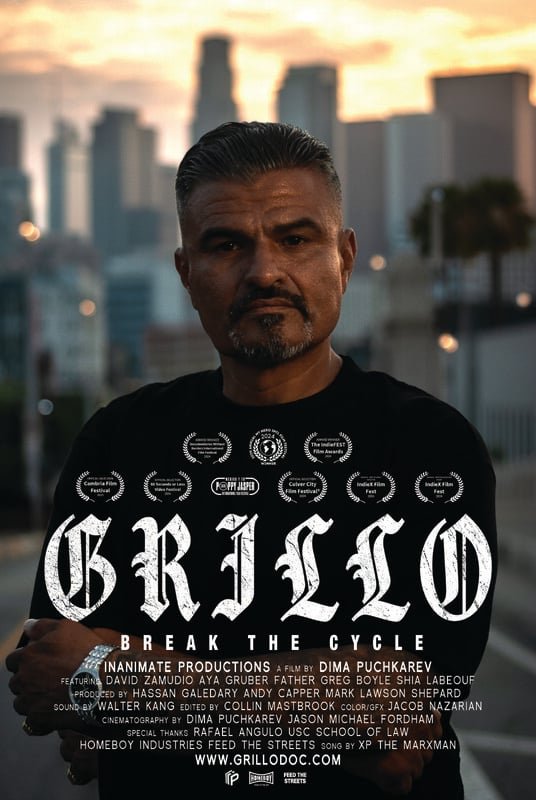
QUESTION#1: What about your film excites you the most?: What excites me most about Grillo is the way the film captures the unexpected depth, humor, and spirit of a man whose life story is both uniquely his own and universally relatable. Grillo is someone who has faced extraordinary challenges, yet he moves through the world with a combination of artistry, humility, and raw honesty that immediately disarms people. Being able to bring his voice to the screen—and to let audiences really feel who he is beyond labels or assumptions—is what fuels the heart of this documentary.
What also excites me is the response the film continues to generate in spaces I never imagined. One of the proudest moments for me was Grillo being selected to screen at the second-ever San Quentin Film Festival, held inside the prison. To have formerly incarcerated filmmakers and currently incarcerated men engage with his story—sharing how it resonated, what it sparked, what it reminded them of—was incredibly meaningful. It confirmed for me that storytelling has the power to bridge worlds, open conversations, and create connection where you wouldn’t expect it.
Grillo’s life is full of humor and depth, but it’s also full of art: murals, stories, and reflections that show how creativity becomes a form of survival and identity. What excites me most is that the film doesn’t sensationalize his struggles; instead, it highlights his humanity, his growth, and the way he continues to show up with heart.
As a filmmaker, I’m drawn to stories that have both grit and soul—stories where someone’s resilience becomes the quiet engine that moves everything forward. Grillo embodies that. The film’s impact comes from its intimacy: small moments, real conversations, and the surprising beauty that emerges when someone lets you into their world without filters.
Ultimately, what excites me most is sharing Grillo with audiences who may not know his story yet, but will recognize the power, humor, and hope inside it.
QUESTION#2: What is it about your current movie that will influence your next film?: My current film taught me the power of intimate, character-driven storytelling and the impact of giving people space to share their truth. The emotional honesty, vulnerability, and real-world stakes in this project will carry into my next film—pushing me to go even deeper, listen even closer, and create stories that honor the resilience and humanity of the people at the center of them.
QUESTION#3: When you’re shooting a film, do you think of time as something you capture or something you construct?: I think of time in film as both captured and constructed. I’m documenting real, unrepeatable moments as they unfold, but once I’m shaping them in the edit, I’m building a rhythm, an emotional arc, a sense of movement that didn’t exist before. The raw moments are captured, but the meaning—the experience of time—that’s constructed.
QUESTION#4: What’s a limitation you wish you had on your next shoot that would force you into making interesting creative decisions?: A limitation I’d actually welcome on my next shoot is being restricted to using only natural or practical light. Working within that constraint forces a level of intentionality—leaning into shadows, timing scenes around changing daylight, and letting imperfection shape the emotional tone. It pushes me to build atmosphere through composition, texture, and performance rather than relying on controlled lighting setups. That kind of limitation creates a raw, honest visual language that often leads to more surprising and authentic creative decisions.
QUESTION#5: If a film shoot is like a living organism, which department do you think functions as its nervous system?: The Assistant Director department functions as the nervous system of a film shoot. They’re the ones transmitting information, coordinating movement, and keeping every department aligned in real time. Like a neural network, they anticipate problems before they arrive, respond instantly to changes on set, and ensure that every limb of the production is communicating and firing in sync. When the AD team is sharp, the entire production feels connected, responsive, and alive.
Social media tags to share with our readers: @grillodoc @dimathaman @davidcardenas275